
AI is all anyone wants to talk about in boardrooms these days. But the dirty secret that enterprise leaders are discovering is that the biggest bottleneck isn’t the models themselves — it’s the state of their data.
Consumer AI tools are fast and flashy. They feel magical. But scaling AI inside a real business? That requires something far less glamorous: a data infrastructure that’s actually unified, governed, and built for the job. And right now, most companies don’t have it.
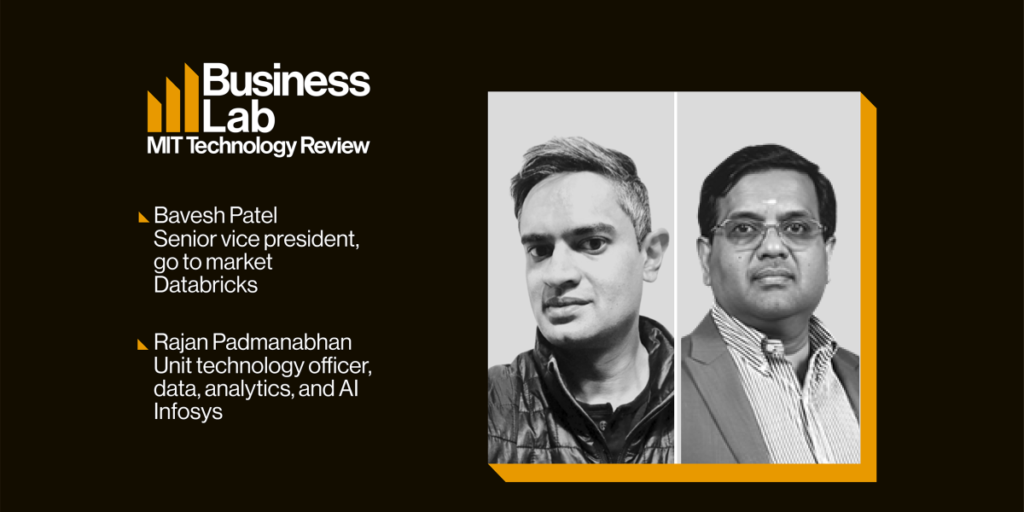
Bavesh Patel, SVP at Databricks, put it bluntly: “the quality of that AI and how effective that AI is, is really dependent on information in your organization.” The problem is that information is scattered across legacy systems, siloed apps, and incompatible formats. You can’t expect an AI to produce trustworthy, context-rich outputs when it’s feeding on fragmented garbage.
“Really, the big competitive differentiator for most organizations is their own data and then their third-party data that they can add to it,” Patel says.
If the foundation isn’t right, you end up with what Patel calls “terrible AI.” That means moving beyond disconnected SaaS platforms and dashboards toward an open data architecture that can handle both structured and unstructured data, preserve real-time context, and enforce access controls. Without that, you’re just throwing models at a mess.
Rajan Padmanabhan, unit technology officer at Infosys, makes a good point about tying AI to business metrics. Too many companies treat AI as a shiny innovation project rather than linking it directly to measurable outcomes. If you can’t tell whether an AI initiative is delivering value, you should kill it fast.
Patel also sees a huge opportunity in AI literacy for business users. “They’re very eager to understand how they should be thinking about AI,” he says. “What does AI mean when you peel the covers? What are the pieces and the building blocks that you need to put in place?”
The next wave is already on the horizon. AI agents are evolving from copilots into autonomous operators that manage workflows and transactions. Padmanabhan describes this shift as moving “from a system of execution or a system of engagement to a system of action.”
The companies that win will be the ones that build the right data foundation now. The rest will be stuck with terrible AI and a lot of explaining to do to their boards.
Comments (0)
Login Log in to comment.
Be the first to comment!