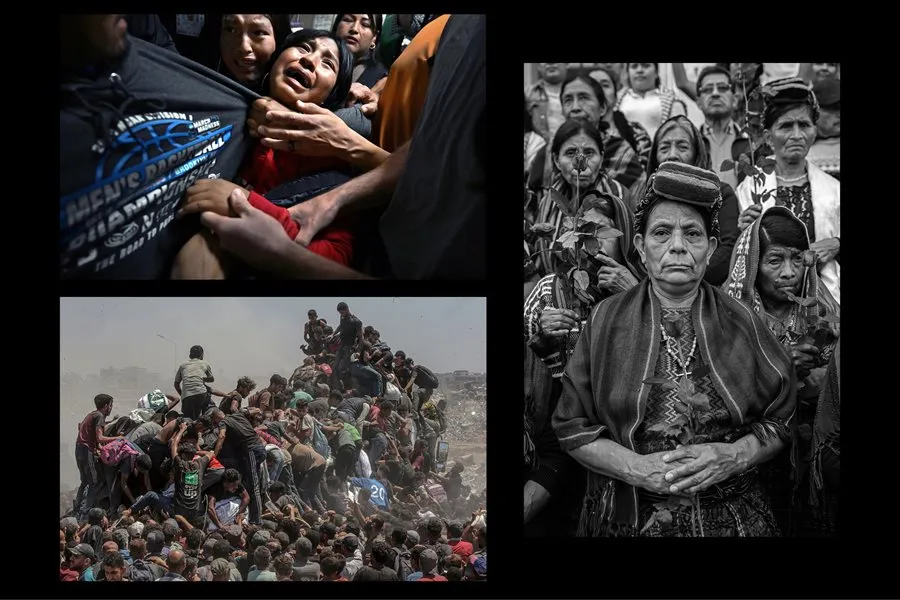

The Verge has been chewing on this question for a while now: in the age of generative AI, what the hell is a “real” photograph anymore? The World Press Photo competition just gave us a pretty clear answer, and it’s not a fluffy one.
The 2026 winner, announced yesterday, is Carol Guzy’s “Separated by ICE.” It’s a brutal, gut-punch of an image showing children clinging to their father after an immigration hearing. Classic photojournalism: raw, uncomfortable, and undeniably real. Guzy is no stranger to this kind of work, and the photo does exactly what the best documentary photography should do—it makes you stop and feel something uncomfortable.
But the real headline here isn’t just the winning image. It’s how the competition got there. World Press Photo, the independent nonprofit behind it all, has been tightening its rules around AI tool usage. To even be considered, entrants had to follow specific guidelines that basically say: you can use software to process the image, but you cannot generate or substantially alter the content. No adding, no removing, no inventing.
This is a higher bar than some other contests, and honestly, it’s about time. We’ve seen too many “photo” competitions get embarrassed by entries that were clearly AI-generated or heavily manipulated. The World Press Photo stance is a refreshingly firm line in the sand. They’re saying, “This is what a photo is: a capture of something that actually happened in front of a lens.”
Is it a perfect definition? No. There’s always gray area with dodging, burning, color grading, and compositing. But for a contest that’s supposed to document reality, this approach makes more sense than the wishy-washy “we’ll review it case by case” nonsense we see elsewhere. It forces the conversation, and Guzy’s image is a powerful reminder of why that conversation matters.
I’m not saying AI can’t be a tool in a photographer’s workflow—it clearly can be for things like noise reduction or basic retouching. But when you’re entering a photojournalism contest, the line should be clear: the camera captured the moment, not the algorithm. The World Press Photo competition just drew that line, and it’s a good one.
Comments (0)
Login Log in to comment.
Be the first to comment!