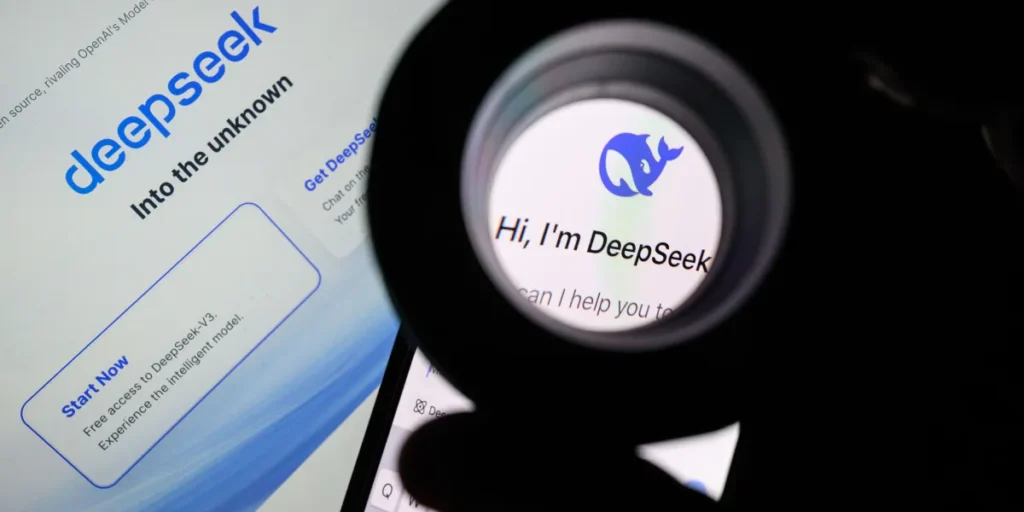

DeepSeek just released V4, their long-awaited flagship model, on April 24. I’ve been watching this space for years, and while the hype around Chinese AI models has been loud lately, V4 actually delivers on some important fronts. It’s not going to cause the same shockwave as R1 did back in January 2025—that model came out of nowhere and made everyone sit up—but V4 is a solid step forward.
Let’s get the basics out of the way. V4 comes in two flavors: V4-Pro, the big one for coding and complex agent tasks, and V4-Flash, the cheaper, faster sibling. Both are open source, which means you can download, modify, and run them yourself. That’s a big deal because most frontier models are locked behind APIs with per-token pricing that adds up fast.
The pricing is where V4 really shines.
V4-Pro costs $1.74 per million input tokens and $3.48 per million output tokens. Compare that to OpenAI’s GPT-5.4 or Anthropic’s Claude-Opus-4.6, and you’re looking at a fraction of the cost. V4-Flash is even cheaper: $0.14 per million input tokens and $0.28 per million output tokens. That’s one of the cheapest top-tier models I’ve seen. For developers building applications, this is a no-brainer. You get frontier-level capabilities without the budget-busting bills.
Performance-wise, V4 holds its own. On major benchmarks, DeepSeek claims V4-Pro matches Anthropic’s Claude-Opus-4.6, OpenAI’s GPT-5.4, and Google’s Gemini-3.1. I’ve seen these claims before, and I’m always skeptical, but the numbers are impressive. It also beats other open-source models like Alibaba’s Qwen-3.5 and Z.ai’s GLM-5.1 on coding, math, and STEM problems. That’s not just marketing fluff—those are real differentiators.
DeepSeek ran an internal survey with 85 experienced developers, and over 90% included V4-Pro among their top choices for coding tasks. I’d take that with a grain of salt since it’s self-reported, but it’s still a strong signal.
The memory efficiency is a genuine innovation.
Both versions handle a 1 million token context window. That’s huge. For reference, that’s like processing an entire novel or a massive codebase in one go. The trick is a new architecture that manages memory more efficiently, so you’re not paying a computational penalty for long inputs. This has been a pain point for years—models like GPT-4 can handle long contexts, but the cost skyrockets. DeepSeek seems to have cracked that nut.
This matters for real-world applications. Think about legal document analysis, long-form code review, or even processing entire research papers. With V4, you can dump a ton of text in and get coherent outputs without breaking the bank.
But let’s not pretend everything is rosy.
DeepSeek has had a rough year. There were major personnel departures, delays in previous model launches, and increasing scrutiny from both the US and Chinese governments. The company has become a symbol of China’s AI ambitions, but that comes with baggage. V4’s release feels like a comeback attempt, and while the tech is solid, the geopolitical pressure isn’t going away.
Also, DeepSeek has optimized V4 for popular agent frameworks like Claude Code, OpenClaw, and CodeBuddy. That’s smart—it makes the model immediately useful for developers already using those tools. But it also means you’re locked into their ecosystem to some extent.
Will V4 shake the AI field like R1 did?
Almost certainly not. R1 was a surprise. It came out of nowhere, trained on limited computing resources, and still managed to stun the industry. V4 is an evolution, not a revolution. But that doesn’t make it irrelevant. For developers and companies looking for affordable, open-source frontier models, V4 is a serious option. The pricing alone makes it worth a look.
I’ve been burned by hype before, but DeepSeek V4 feels different. It’s not trying to be the next big thing—it’s trying to be a practical, usable model that doesn’t cost a fortune. And in that, it succeeds.
Comments (0)
Login Log in to comment.
Be the first to comment!