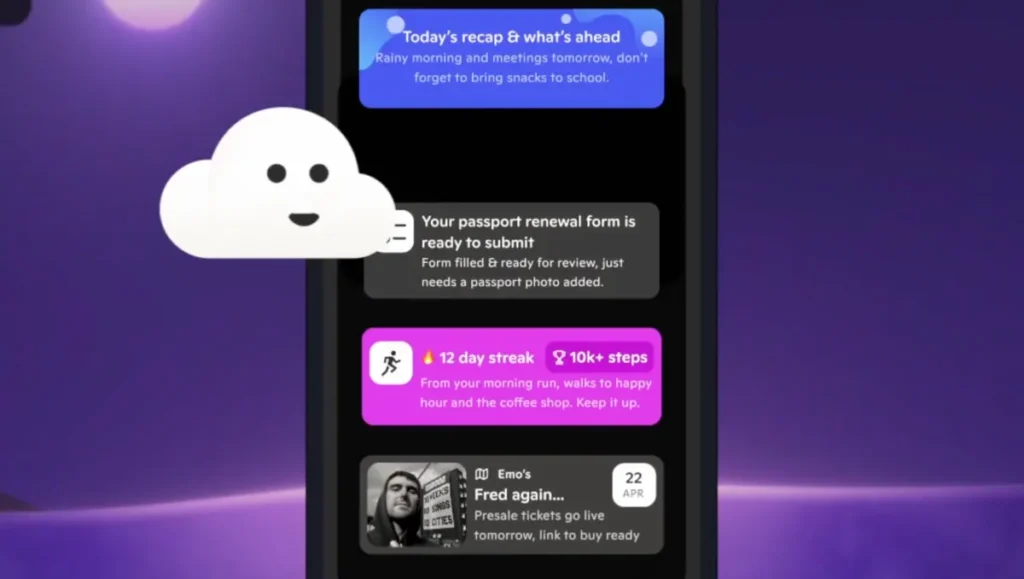

There’s a new AI app for iPhone called Skye, and it’s already got investor money in the bank — before anyone outside a small beta group has even used it. That’s either a vote of confidence or a sign that the AI hype train hasn’t slowed down yet. Probably both.
Skye isn’t trying to be another chatbot or photo editor. It’s aiming to replace your iPhone home screen with something that actually learns from how you use the phone. Instead of a static grid of icons, Skye surfaces the apps, contacts, and actions you’re most likely to need at any given moment. Think of it as a proactive launcher that adapts throughout the day.
The pitch is simple: your phone knows when you wake up, when you commute, when you’re at work, when you’re winding down. Why shouldn’t the home screen reflect that? Skye uses on-device AI to figure out context — time of day, location, recent activity — and rearranges itself accordingly. No cloud processing, no creepy data harvesting. At least that’s the promise.
Investors seem to buy it. The round wasn’t disclosed, but the fact that Skye raised any money pre-launch tells me two things. First, the team has a track record or a compelling demo. Second, VCs are still hungry for AI applications that go beyond the usual text generation and image synthesis. A smarter home screen is one of those ideas that sounds obvious in hindsight but is surprisingly hard to execute well.
I’ve tried a few home screen replacements over the years — Launcher on Android, various iOS widgets, even some jailbreak tweaks back in the day. Most of them end up feeling gimmicky or too slow. The challenge for Skye is making the AI feel helpful without being intrusive. If it gets the context wrong too often, people will just turn it off.
Apple’s own approach to proactive suggestions — Siri Suggestions and the widgets — has been conservative. Skye is betting that users want something more aggressive. Whether iOS allows enough system-level access for that to work well is another question. Apple has historically been stingy with home screen customization. Skye will need to work within those limits or convince Apple to open up.
Still, the timing is interesting. We’re seeing a wave of AI-first mobile apps that don’t just bolt on a chatbot but reimagine core phone experiences. If Skye delivers on its promise, it could be one of the more useful AI tools on your phone — not because it’s flashy, but because it quietly makes the device less annoying to use.
I’ll reserve judgment until I can actually try it. But the fact that investors are willing to bet on a home screen app in 2026 says a lot about where the AI market is heading. It’s no longer about generating text or images. It’s about making the phone itself smarter. And that’s a harder problem worth solving.
Comments (0)
Login Log in to comment.
Be the first to comment!