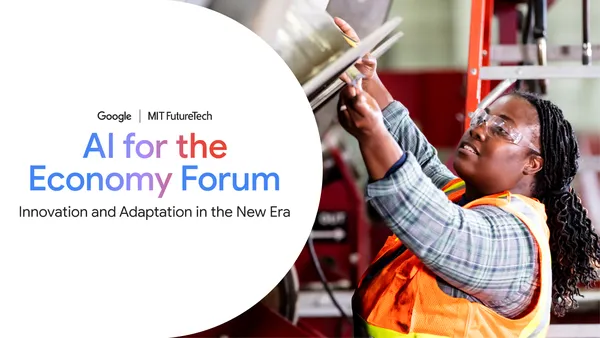

Google and MIT FutureTech just wrapped up their first AI for the Economy Forum in Washington D.C. The premise they started with is actually the right one: neither the benefits nor the risks of AI are automatic. How this plays out for jobs and the economy is something we can still shape, but it requires companies, governments, and researchers to actually work together rather than just issue press releases.
I’ve sat through enough of these forums to be skeptical, but I’ll give Google credit for putting money behind the words. They announced two concrete things: new research investments to help governments and companies make informed decisions, and training programs to help workers adapt.
The research side: funding the right questions
The AI & Economy Research Program is funding external experts through a Visiting Fellows program. MIT’s David Autor is involved, which is a good sign — he’s been doing serious work on how technology reshapes labor markets for years. They’re also funding research on how firms can actually encourage AI adoption that benefits both workers and companies, not just shareholder returns.
One finding from MIT researchers Ben Armstrong and Julia Shah caught my attention: the most successful AI deployments minimize drudgery, promote learning, and foster collaboration. That sounds obvious, but most companies I’ve seen treat AI as a cost-cutting lever first. The research suggests the opposite approach yields better results for everyone.
Google.org is also funding a global cohort of research institutions looking at AI’s impact on labor markets, sector-specific transformations in manufacturing and healthcare, and the policy environments needed to maximize workforce opportunity. They’ve got Nobel Laureate Michael Spence, Cambridge’s Dame Diane Coyle, and Mohamed El-Erian as academic advisors. That’s a heavyweight lineup, but I’ll be watching whether the research actually informs policy or just sits in PDFs.
Training: where the rubber meets the road
The training side is where things get practical. Google is funding programs to train healthcare workers and create apprenticeships in high-demand fields. This is the kind of stuff that actually matters for people who aren’t already in tech. The challenge, as always, is scale. Training programs are great, but they need to reach millions of workers, not thousands.
I’ve seen similar initiatives from other tech companies that ended up being more PR than substance. Google has a better track record with their Grow with Google programs, so I’m cautiously optimistic. But the speed of AI deployment is accelerating, and training programs need to move just as fast.
What’s missing?
The forum didn’t really address the harder questions: what happens when AI displaces jobs faster than retraining can keep up? How do we handle the transition for workers in their 50s and 60s who can’t easily pivot to new careers? And what about the distribution of benefits — will AI concentrate wealth further or spread it around?
These are the questions that keep economists up at night, and they didn’t get enough airtime. The research program might eventually tackle them, but the timeline matters. We’re already seeing real impacts on knowledge workers, and the next wave will hit harder.
Bottom line
Google is doing more than most tech companies on this front. The research funding is real, the training programs are tangible, and the forum brought together the right people. But the gap between what we know and what we need to know is still enormous. And the gap between training programs and the scale of disruption is even larger.
I’ll be watching the research outputs from this program closely. If they produce actionable insights that actually influence policy and corporate behavior, this will have been money well spent. If it’s just another set of academic papers, then we’re still in trouble.
For now, it’s a step in the right direction. But the pace of AI development means we need to be running, not walking.
Comments (0)
Login Log in to comment.
Be the first to comment!